Martinez Tribune The website of the Martinez Tribune.
600 acres of former farmland could become one of the Bay Delta’s best places to watch birds. Here’s what’s already showing up — and what’s coming next.
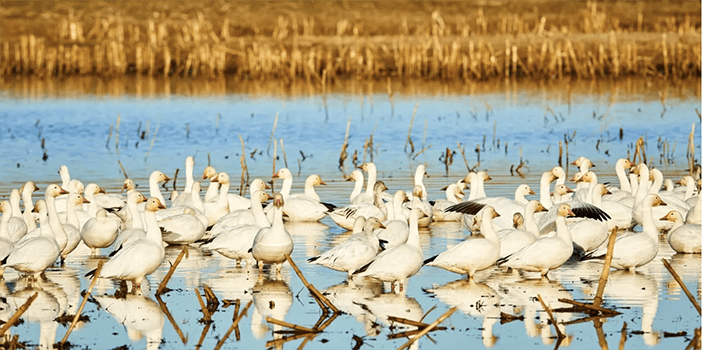 Snow geese having a rest day at Hoover Ranch, Bethel Island.
At a 600-acre former ranch on Bethel Island, the John Muir Land Trust is creating much-needed new freshwater wetlands in the Bay Delta. Hoover Ranch is already well-known in the birding community, and biological surveys have documented more than 80 species here. As wetlands return to the property, biologists expect even more species to follow.
The marquee species is the snow goose. They arrive in enormous flocks after traveling thousands of miles from the Arctic. Individual birds have wingspans of 4 to 5 feet, and winter flocks can number in the tens or even hundreds of thousands.
FRESHWATER WETLANDS
Large siphons will pull water over the existing levee to create the new wetlands — reversing decades of habitat loss caused by converting this land to agriculture. Many migratory duck populations have declined in recent years. Once restored, Hoover Ranch could attract northern shoveler, cinnamon teal, blue-winged teal, green-winged teal, northern pintail, and wigeon, alongside snow geese and sandhill cranes.
BULRUSH AND CATTAIL WETLANDS
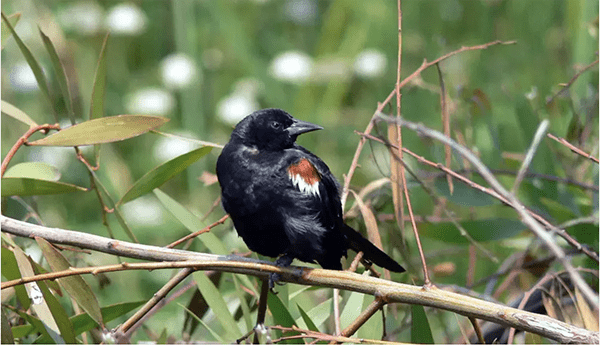
There are early signs that parts of Hoover Ranch will see a resurgence of native bulrush and cattail. These wetland plants once covered large areas of the Bay Delta and provide important nesting habitat for tricolored blackbirds, a state-threatened species. Visitors have already heard the birds’ buzzy, almost catlike calls on the property. Restoring wetlands at Hoover Ranch would create much more of the dense vegetation they rely on for breeding and shelter.
UPLAND REFUGIA
Wetlands aren’t the only habitat that matters here. The northern end of Hoover Ranch is mostly grassland, and that dry ground plays an important role. Burrowing owls hunt and nest here, sparrows forage among the grasses, and the endangered salt marsh harvest mouse relies on adjacent uplands during floods and high tides. Together, the property’s wetlands and grasslands support a wider range of wildlife than either habitat could alone.
THE SAND DUNE
A rare historic sand dune at the center of the property will be protected and maintained. Ground squirrels love to dig burrows in its loose soil. Burrowing owls rely on those squirrels for food and take over their burrows once they’re done with them. Birders tend to love these owls — they’re small, oddly proportioned, and a little funny-looking.
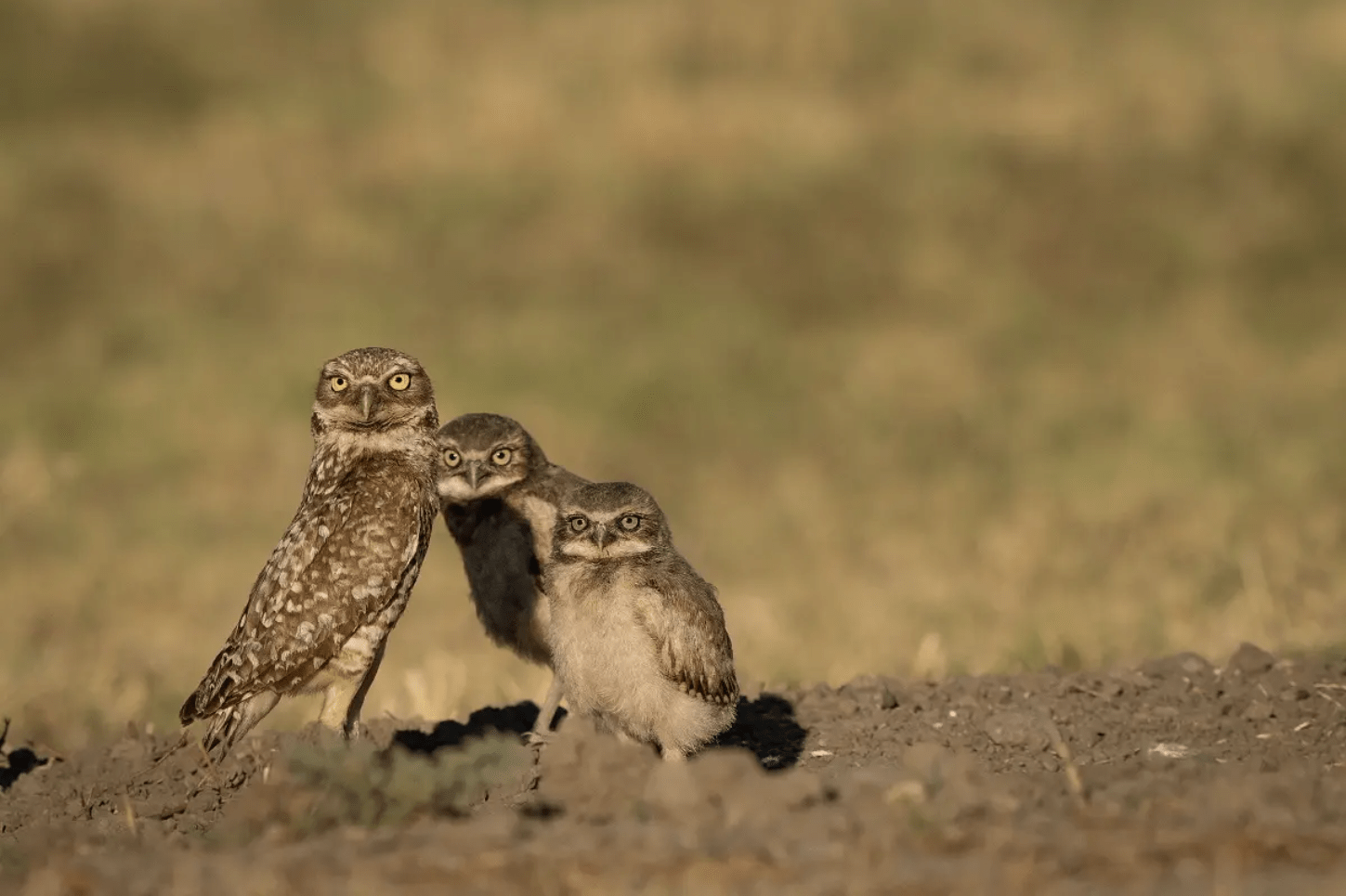
Burrowing owls can dig their own burrows, but usually let ground squirrels do the hard work first.
RIPARIAN WOODLAND
Not every bird at Hoover Ranch depends on wetlands. In the northeast corner of the property, a small patch of riparian woodland still grows along an old watercourse. This type of habitat once lined rivers and streams throughout the Delta but has become increasingly rare. Restoring and expanding it would create nesting and shelter opportunities for species that need trees and dense vegetation, adding another layer of habitat to the landscape.
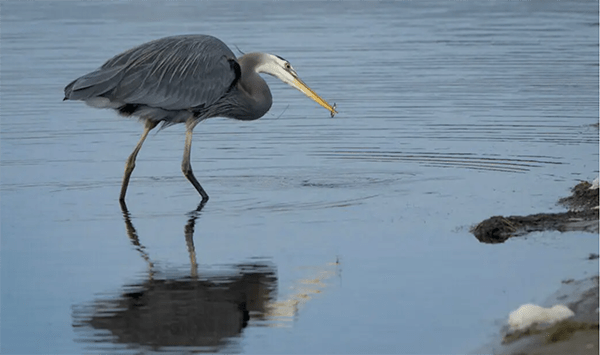
Great blue herons can stand perfectly still for minutes before striking prey with lightning speed — and can swallow fish over a foot long.
HAWKS AND SHRIKES
Hawks ride the wind currents here, using their sharp eyesight to spot prey on the ground below. A pair of Swainson’s hawks — a state-endangered species — was spotted recently. Red-tailed hawks are a far more common sight, but their nests aren’t: two active nests were observed this spring. Keep an eye out for loggerhead shrikes. They hunt large insects, lizards, and small rodents, and are famous for impaling prey on thorns or barbed wire to save for later.
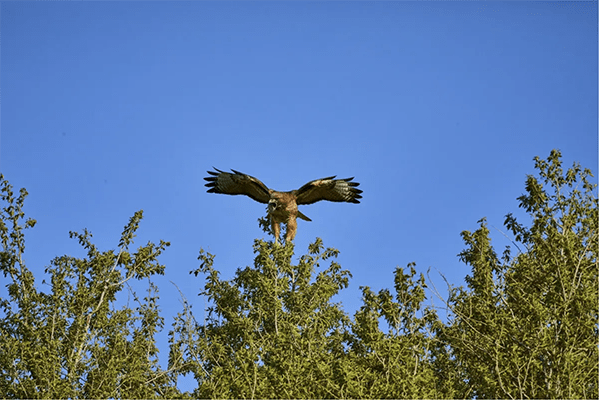
That dramatic “eagle scream” you’ve heard in movies? It’s actually a red-tailed hawk.
WHY IT MATTERS
Hoover Ranch is one of three active JMLT restoration projects in the Bay Delta. The Delta supports 750 native species, including two-thirds of California’s spawning salmon and roughly a billion migratory birds along the Pacific Flyway. Twenty-five million Californians depend on it for drinking water.
More than 90% of the Delta’s historic tidal wetlands have disappeared. Hoover Ranch won’t reverse all of that loss, but it can help bring back a small piece of what once existed there.