Martinez Tribune The website of the Martinez Tribune.
BY XAVIER JOHNSON
Rick Wakeman has explored Mars before, in 1971 playing piano on David Bowie’s “Life on Mars?,” and in 2020 making the trip himself with the instrumental album The Red Planet. Now, with Return to the Red Planet, he heads back, saying there was still much left to explore.
There’s always more to explore. It’s a sentiment popular culture has shared for decades, from fringe theories that the Martian moon Phobos is a hollowed-out artificial satellite to the rovers that continue to reveal the planet’s secrets. Much of the album’s inspiration comes from Wakeman’s friendship with Bowie, whose fascination with the extraterrestrial ran through his work.
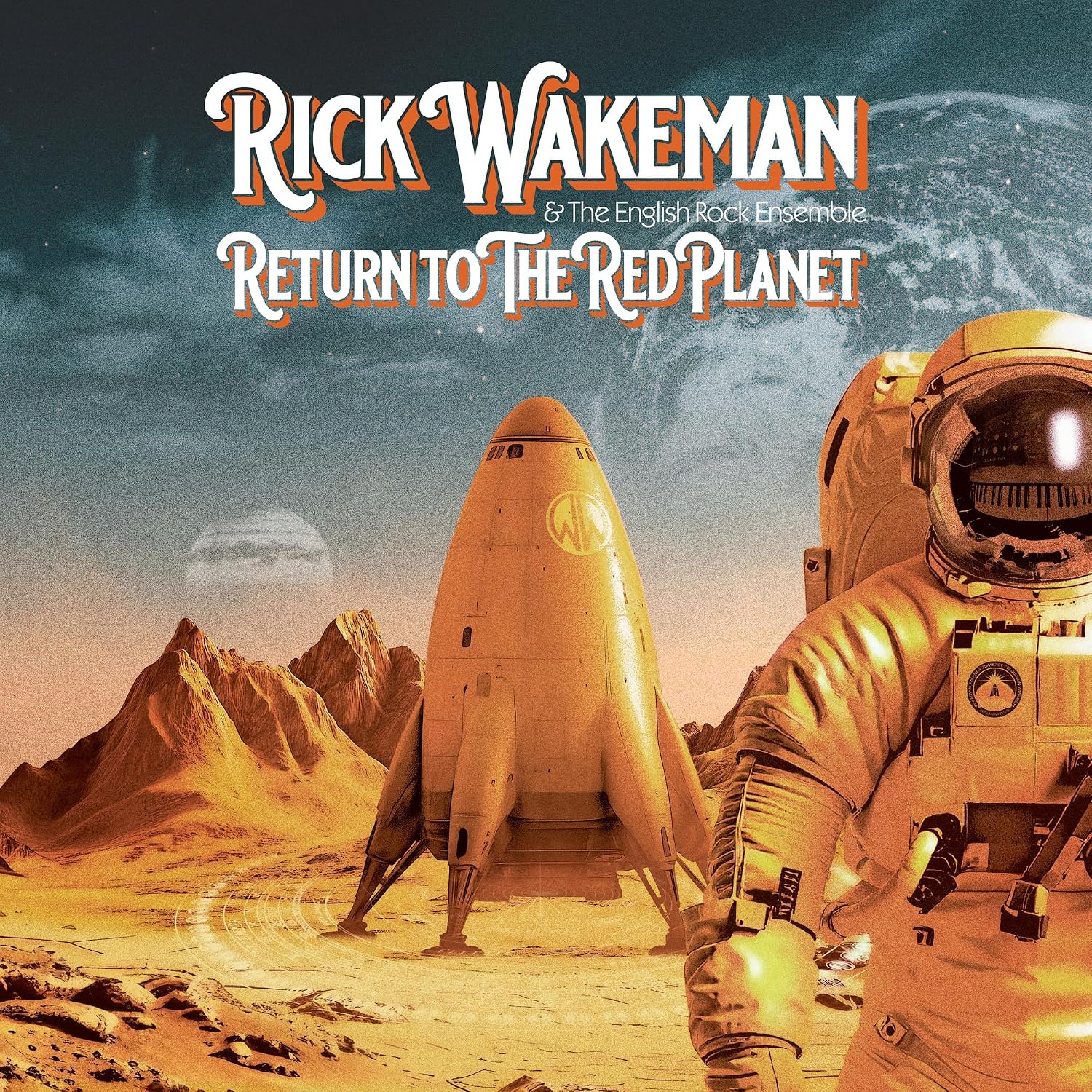
Wakeman, now 77, is one of progressive rock’s foundational keyboardists. He cut his teeth as a prolific session musician before joining Yes, where his playing shaped classic albums like Fragile and Close to the Edge. That output, alongside a hefty solo career with classics of its own, have inspired generations of rock musicians across subgenres.
Joining Wakeman is his English Rock Ensemble: Lee Pomeroy on bass, Dave Colquhoun on guitar, and Adam Falkner on drums. The biggest change from the last Red Planet album is the addition of Mollie Marriott, daughter of the late Steve Marriott, on vocals.
What hasn’t changed is the sound. The album has the polish of a modern release, but its songwriting is dripping with classic prog sauce. Much of today’s progressive rock and metal has moved on, borrowing the chunky riffing of djent or the lush, solo-heavy soundscapes of bands like Scale the Summit.
Wakeman bucks these modern trends. He busts out the organs and quirky synths that defined the early years of his career, and few artists still deliver that classic prog sound with this much conviction.
Unsurprisingly, the keyboards are the star. Wakeman’s synth choices are dexterous and rarely stale or repeated. He also knows when to lay back and support the group while also giving fans what they want with technical wizardry. The instrumental showcase “Noctis Labyrinthus” is the clearest example, a reminder of why he remains one of the genre’s defining players.

Then there’s “St. Paul’s Bay,” which is flat-out awesome. A bouncy groove carries the track through its various detours, from the horns in the first third to the extended solo that highlights the latter half. It’s the most jam-style song on the album, the one moment where it feels like a full band meshing, and it totally works.
That’s what makes the rest of the album frustrating. The band doesn’t feel like a unified force. Marriott’s moody, atmospheric vocals add to the overall feel, but they mostly function as scenery. Technically, her performance is solid, yet none of the melodies or delivery stick after the song ends.
The same issue runs through much of the supporting instrumentation. Rarely are the drums, guitar, or bass inspiring awe. Falkner is a machine behind the kit and the glue holding these long, winding songs together, but he’s more dependable rather than fantastic. Colquhoun lays down some strong riffs and gets a nice solo on “Medusae Fossae,” but these moments to stand out are too few. The English Rock Ensemble delivers technically sound support, and that’s mostly all it does.
Of course, this is a Wakeman solo record, and it’s natural for his keys to take center stage. But other prog greats have shown that a solo album can still be a full-band showcase. Devin Townsend and Neal Morse’s solo efforts regularly do the same with his collaborators, for example.
If Wakeman returned to Mars on a fresh excavation mission, it’s safe to say on the keyboards he found signs of life. In a career spanning over six decades, Wakeman is still able to amaze on the keys. But the album leaves you wishing the rest of the band was able to showcase similar greatness. With how many songs on this record settle into grooves for extended solos, it’s a shame the songwriting doesn’t take a more egalitarian approach. As a showcase for one of progressive rock’s great keyboardists, Return to the Red Planet delivers. As a band record, it doesn’t quite hit the mark.