Martinez Tribune The website of the Martinez Tribune.
BY TYLER HENSON
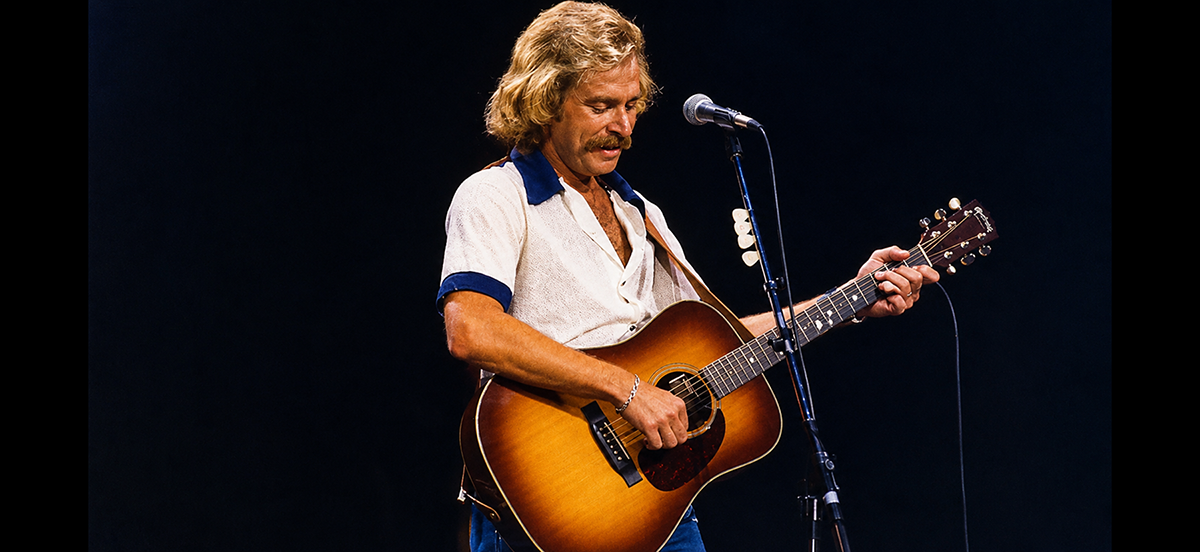
Jimmy Buffett is best known to the uninitiated for hits like “Margaritaville” and “Cheeseburger in Paradise,” but to the enormous inner sanctum of his fans he is worshipped for so much more. His varied and extensive musical talent aside, Buffett cultivated a persona on stage and in albums that was laid back, inviting, and warm. He’s one of those artists that was able to build a lasting, personal relationship with his fanbase by performing his music as if each listener were a good friend. Audiences big or small were treated like his buddies, everyone eager to have a good time their pal Jimmy.
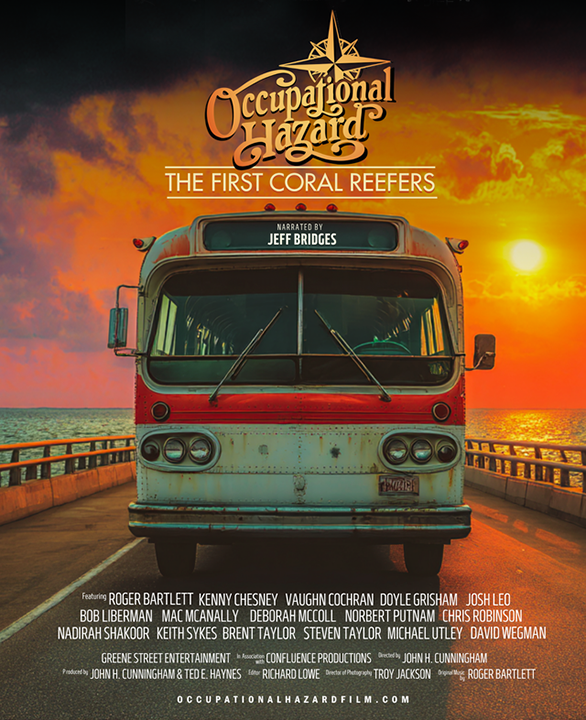
The new documentary, Occupational Hazard, directed by John H. Cunningham, is made in this same spirit of camaraderie. Buffett’s full career is covered, from his humble beginnings seeking stardom in Nashville, through the evolution of his legend in Key West, all the way to his passing in 2023. But the main focus of this film is the span of time from the mid-70’s to the early 80’s, when Buffett formed the first version of his band The Coral Reefers, with whom he would make what most would consider his greatest and most iconic music.
The film is narrated by Jeff Bridges, himself a friend of Buffett’s and speaking with a grin you can hear in his voice, and features extensive interviews with several of the original surviving Coral Reefers, as well as collaborators, producers, and prominent fans. With reverence and infectious enthusiasm, they recount how Buffett discovered and developed his distinctive sound. It was a rapid evolution that began in the folk and country music spaces, before leaping into an eclectic combo of soft rock and palpitating blues combined with the lulling rhythms of the Caribbean.
The Coral Reefers were instrumental (pun intended) in bringing this sound to life. It was their flexibility and willingness to work within these seemingly disparate musical disciplines, not to mention their skill in performing them, that served as the bedrock for Buffett’s creative songwriting style, which was an affectionate, poetic form of storytelling and portraiture informed by the community of Key West eccentrics in which he was becoming a staple figure. His songs were documents of soothing sun and sand, giving way to lonely late nights and early mornings. Many were odes to the friends, bartenders, and one-time pirates that inspired him.
The fact that this creative discovery happened in the midst of ceaseless touring, nonstop parties, and unbelievable excesses of booze and drugs, makes it all the clearer how simpatico the group must have been. Listening to the band members talk, they don’t often bring up memories of disagreement or creative difficulty. From the sounds of it, The Coral Reefers were a fairly frictionless bunch, and there’s not a bad word among them to share about Buffet. Every story is told with fondness (even the nights when the partying got out of hand), and the sense we get is that although the lot of them may not have taken themselves very seriously, they took the music completely seriously. Buffett was the guide along the road, lucky enough to have the right group of people along for the ride.
For a loyal Parrothead, most of this will not likely be new information. We get the tales of writing “Margaritaville,” the recording of breakthrough albums like Changes in Latitudes, Changes in Attitudes (1977) and Son of a Son of a Sailor (1978), which rocketed Buffett to stardom, but many of these are probably familiar to anyone who has spent the last few decades listening to this music. The real selling point of this documentary, beyond its congenial tribute to a beloved musician, is the wealth of archival material assembled as visual compliment. We see not only personal photographs and worn tapes of early performances, but extensive 8mm footage taken with the band on tour at their height. This is the reason even lifelong Buffett fans will want to seek this movie out.
What’s most striking about this footage is that it doesn’t seem to have been edited to exclude the, shall we say, indulgences partaken by the band. A few times, we see several of them boozing and drugging on camera. The surviving members, all happily aged and apparently sober, recall these wild days with a mixture of embarrassment and nostalgia. The impression is not of dark times and dark moods, but simply of good times that knew no limit. Several morbidly fascinating anecdotes are shared, including a remark from one band member that each tour would conclude for her with a routine visit to the emergency room, simply to treat the severe exhaustion and dehydration that resulted from the final compound hangover.
Naturally, the lifestyle took its toll. It was the sheer amount of good times like these that ultimately led to the dissolution of the original Coral Reefers. Health scares and concerns over the longevity of the band forced some difficult decisions to be made. What’s heartening is that nobody seems to carry any bitterness. There is sadness in acknowledging the end, but every person interviewed conveys a sense of acceptance and gratitude for having been a part of such a special time. Several appear relieved at having come out the other side still living! One can assume the full reality may have been messier, that intervening years may have carried at least trace amounts of resentment, maybe even the lingering pain of broken bonds, but that is not what this movie chooses to dwell upon.
Could a note of weary melancholy have enhanced the poignancy of this film? Sure, and it wouldn’t have been out of character with Buffett’s music. Woven throughout his affectionate tropical tributes was a gentle sting of solitude. Based on his bandmates recollections, Buffett had a touch of the maverick about him. For all his companionship and informality, his existence was somewhat removed from the rest of the group. They understood how to work with him, how to give him exactly what he needed musically, but they could not quite enter the same artistic realm he occupied, where a part of himself seems to have been kept secluded. The film is never able to fully uncover the mystery of Buffett’s personality, his drive and protean creativity. It’s the hidden sources of their gifts that are always the hardest aspect of any artist to convey.
However, the side of Buffett and his collaborators the filmmakers have chosen to emphasize – the tropical ease, the affable temperament, the bliss of the music – comes across with adoring enthusiasm. Initiates will find a handy starting point for touring Buffett’s musical land of permanent spiritual vacation, and devoted acolytes will enjoy the time spent in relaxed company with the Coral Reefers, past and present. Just like the music it chronicles, the film is an invitation to kick back and enjoy, cheeseburger and margarita optional but encouraged.
“Occupational Hazard” is currently available to buy or rent on VOD platforms.